Millet
Sub-Saharan Africa
Understanding : Millet
INTRODUCTION
Where to find it
African grocery shops and international food aisles are good starting points. Check which form the recipe needs: whole grain, flour, semolina or a precooked product. Cooking times vary.
Explore further: Cooking tips · Food hygiene and safety advice.
Search Amazon.fr — affiliate link →
Check availability and delivery on Amazon.fr. Compare ingredients, packaging and sellers.
As an Amazon Associate I earn from qualifying purchases.
History and uses
Millet is one of the oldest and most resilient cultivated cereals in African history. An emblematic plant of Sudano-Sahelian societies, millet shapes the landscape, economy, symbolism, and gastronomy of vast territories, from Mauritania to Chad, Senegal to Sudan, Mali to Nigeria, and extending to Southern and Eastern Africa. Often reduced to tiny, drought-adapted grains, millet actually conceals an inexhaustible botanical and culinary richness, enduring through centuries as a primary reservoir of survival, culinary traditions, and agro-ecological innovation. Forgotten or underestimated in the era of rice and wheat, millet is now experiencing a global resurgence of interest for its role in food security, the fight against hunger, health, and climate resilience. It occupies a central place in daily African life—both rural and urban: bread, porridge, beer, couscous, pancakes, festive and ritual dishes; millet, the “grain of ancestors,” is also a symbol of solidarity, wisdom, transmission, and sustainable innovation on the continent. This text offers a detailed exploration of millet: its origin, varieties, production, culinary specialties, nutritional aspects, social uses, ritual traditions, and contemporary adaptations and challenges of this “African pearl.”
1. ORIGIN, HISTORY, AND BOTANICAL DIVERSITY
1.1. African Origins and Domestication Millet, also called “mille graines” (thousand grains) or “petit millet” (small millet), actually encompasses several species of cereals: • Pearl millet (Pennisetum glaucum or “candle millet”): the most widespread in West and Central Africa. • Finger millet (Eleusine coracana, “ragi” in East Africa and Asia) • Common millet or proso millet (Panicum miliaceum) • Broomcorn millet (Sorghum bicolor or “sorghum”): often included in the “millet” family in African climates. The oldest traces of domestication date back approximately 3,000 to 5,000 years BCE, in the Sahel region (Niger, Mali, Chad), the cradle of rainfed agriculture and sedentary agro-pastoral societies. Millet facilitated the emergence of sedentary civilizations in the Niger Bend, ancient Ghana, Mali, and Songhai, primarily centered around “low-rain demand” agriculture. 1.2. Diffusion and Adaptation Extremely hardy, millet has spread throughout sub-Saharan Africa: in the arid Sahel, the Sudanese plateaus, the savannas of East Africa, Southern Africa (Namibia, Zambia, Botswana…), and even to India, China, and Southern Europe. Its hardiness (tolerates drought, grows in poor soils, short growing cycle of 70 to 120 days), easy storage, and biological diversity make it a safeguard against climate fluctuations.
2. AGRICULTURAL CYCLE AND MILLET ECONOMY IN AFRICA
2.1. Cultivation Techniques Millet is sown at the beginning of the rainy season (June-July). Germination occurs with the first rains. It does not require irrigation, resists long periods of drought, and most varieties produce long spikes (seed heads) that are harvested manually from August to October. Techniques are inherited from tradition: • Hoeing, broadcast sowing or in pockets. • Manual weeding, grouped in village communities, inter-family solidarity. • Finger millet, being earlier, is often planted as a “backup” or supplementary crop in gardens. 2.2. Economy, Processing, and Market Millet is stored dry, pounded with a millstone, threshed, often in the courtyard, within the family: women are primarily responsible for threshing, sorting, and processing (flour, semolina, couscous). In markets, it is traded fresh, as grains, flour, in the form of biscuits, couscous, porridges, or processed into local beer (dolo, chapalo, tchapalo…), providing fundamental income for rural families.
3. CULINARY PREPARATIONS: A TASTY AFRICAN HERITAGE
3.1. Porridge and Breakfast Millet porridge (pap, koko, sari, tuwo, porridge, akamu…) is the nutritional foundation for millions of African children: made from millet flour or semolina, it is prepared with milk or water, in sweet versions (sugar, honey, peanuts, fruits) or savory (okra, peanut paste, green vegetables). It is used for weaning, convalescence, but also for adult breakfast. In West Africa, it is associated in the imagination with mothers, grandmothers, and childhood. 3.2. Couscous and Festive Dishes • Millet couscous (Senegal, Mali, Chad, Burkina Faso, Mauritania, Niger…): hand-rolled semolina, steamed (over meat/sauce or vegetable broth), served with various sauces (vegetables, meat, baobab leaf, meatballs, dried fish, peanuts). • Tô, sadza, ugali: semi-solid porridge of millet flour (or sorghum), cut with a knife, served in a ball or on a plate, the basis of family meals, dipped in leaf sauce, peanut sauce, tomato sauce. • Aiyasha, the ball: a specialty of Mali, Guinea, Ivory Coast, a collective ceremonial dish. 3.3. Pancakes, Cakes, Street Food • Thin pancakes (masa, millet injera, popular crepes in northern Nigeria, Niger, Ghana) • Millet fritters, “cakes,” traditional biscuits for Ramadan or rural life • Sweet millet pastilles or couscous with dates, honey, cashews, sometimes served in the African diaspora • Puffs, akassa, “dokounou” (steamed millet flour tamales) 3.4. Traditional Drinks • Millet beer (dolo, tchouk, chapalo): artisanal fermentation of malted grains, a communal, ritual, and festive drink, essential during ceremonies, funerals, or harvest festivals. • Infusions of roasted grains, a fortifying drink, appetite suppressant. 3.5. Green Millet Soup At the time of milky maturity (before harvest), green millet is grilled or simmered in soup, one of the markers of the agricultural calendar.
In my books
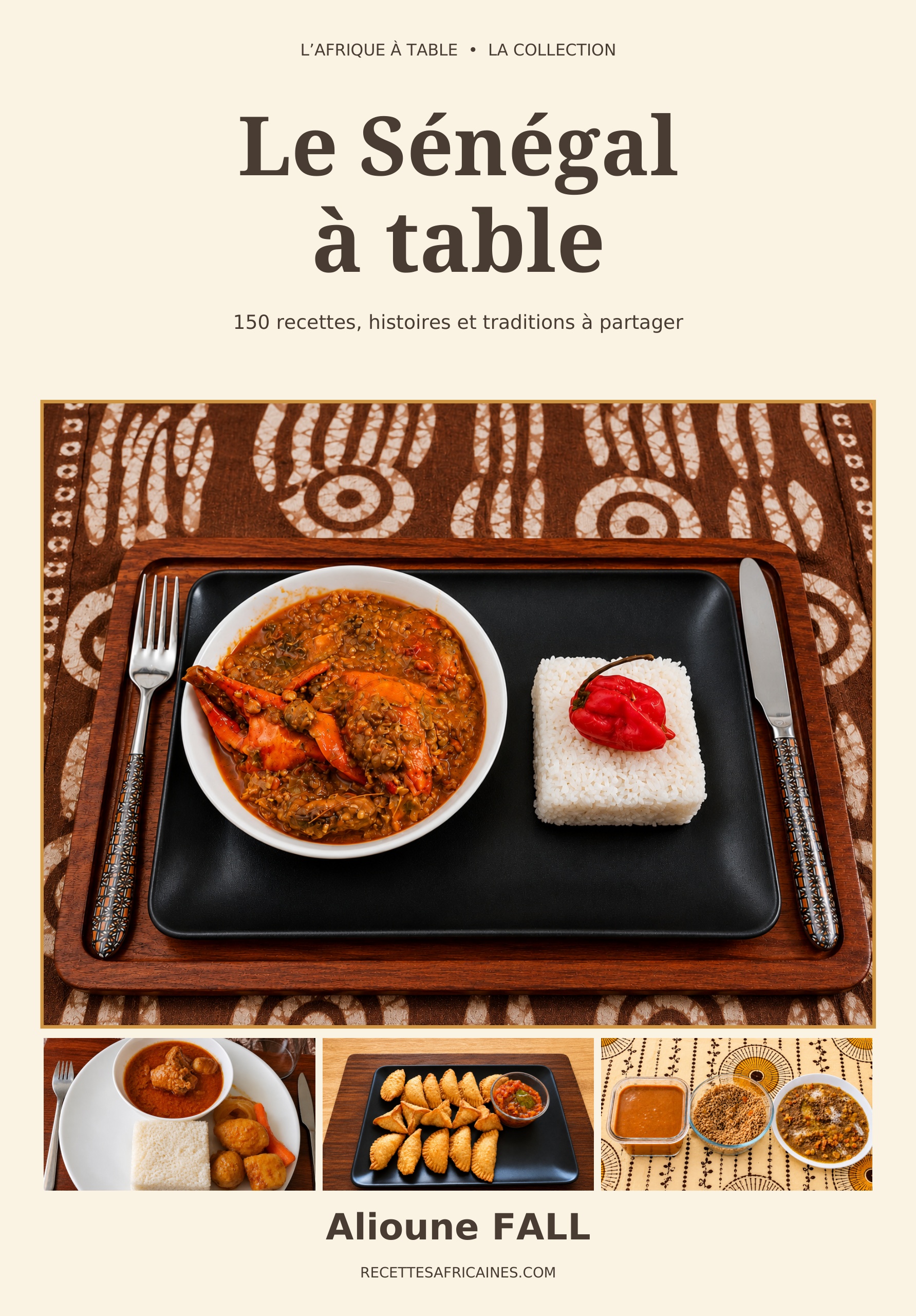
Explore Senegalese cooking with Le Sénégal à table, my collection of 150 recipes, stories and traditions to share. This book is in French, by Alioune FALL.
Explore further
4. SOCIAL, RITUAL, AND IDENTITY PLACE
4.1. Food of Sharing and Community Life Millet, especially couscous or tô, is the dish of family and village solidarity: all hands are busy with processing, ritualized cooking, then people eat from the same dish, by hand, according to rank and respect for elders. During celebrations (weddings, baptisms, births, funerals), millet bread, balls, and beer circulate. During agricultural work, millet porridge punctuates breaks. 4.2. Symbol of Terroir and Transmission The quality of the semolina, the skill in rolling couscous, the “precise” taste of tô, or the lightness of pancakes serve as tests of social integration or entry into the “extended family” (rites of passage, evaluation of young fiancées). 4.3. Link to the Sacred, to the Cycle of Life In many cultures, millet is a sacred cereal, linked to fertility, rain, and purification rites. Porridge is offered to ancestors, beer in funeral rites, and the first fruits of millet during thanksgivings to earth spirits.
5. NUTRITIONAL VALUE AND HEALTH
5.1. Rich, Balanced, and Gluten-Free Millet is: • Very rich in complex starch (long-lasting satiety). • An important source of protein (10-12%), more than rice or cassava, but less than wheat. • Rich in fiber, iron, magnesium, zinc, potassium, phosphorus, B vitamins, antioxidants. • Gluten-free: ideal for celiac diets, cereal rotation, very digestible. • Rich in vitamins A, B1, PP… depending on the varieties. 5.2. “Healthy,” Protective Food • Prevents malnutrition (basis of “pap” for babies, simple enrichment with peanuts or milk). • Limits glycemic spikes (low glycemic index). • Beneficial effect on intestinal flora and satiety. • Traditional fermentation (porridges, beers) enriches the microbiota.
6. MODERN DYNAMICS, REINVENTION, AND CHALLENGES
6.1. From Field to City A marker of the rural world, millet resists urbanization: resurgence of millet dishes in fast food, food trucks, school canteens, “healthy” brunches, Afro-urban bakeries (millet bread, crepes, cakes). 6.2. Diaspora and Culinary Innovation Millet is making its way into fusion cuisine: cookies, pancakes, modern couscous, vegan burgers, millet flours for children, African superfoods (e.g., “fonio” or “teff,” related cousins). 6.3. Food Security, Sustainable Development, Farmer Chains • Resilience: millet nourishes when all else fails, withstands drought, prevents famines. • Growing international demand: rising millet prices, organic labeling, fair trade, short supply chains, support for agroecology. • Institutional promotion: International Year of Millets (UN, 2023), “Eat Local” campaigns, training in millet processing and cooking. 6.4. Challenges • Devaluation (“poor people’s cereal,” sometimes stigmatized). • Difficulty of processing, arduousness of artisanal milling, sorting. • Competition from imported rice, corn, industrial wheat. • Need for technical innovation (dehulling, recipes, diversification).
CONCLUSION A grain of patience, a pillar of African resilience, millet is more than just food: it is the “bread of the savannas,” the memory of ancestors, the future of local lands facing the challenges of climate, globalization, and health. Whether boiled, fermented, rolled, cooked, offered, or shared, millet symbolizes the art of doing much with little, the solidarity and creativity of African societies. To keep it alive, transmit it, and innovate with it is to guarantee the food sovereignty, diversity, and dignity of an entire continent—today, tomorrow, and for future generations.
ENJOY YOUR MEAL! © Photo credit: recettesafricaines.com. All rights reserved.
In the kitchen : Millet
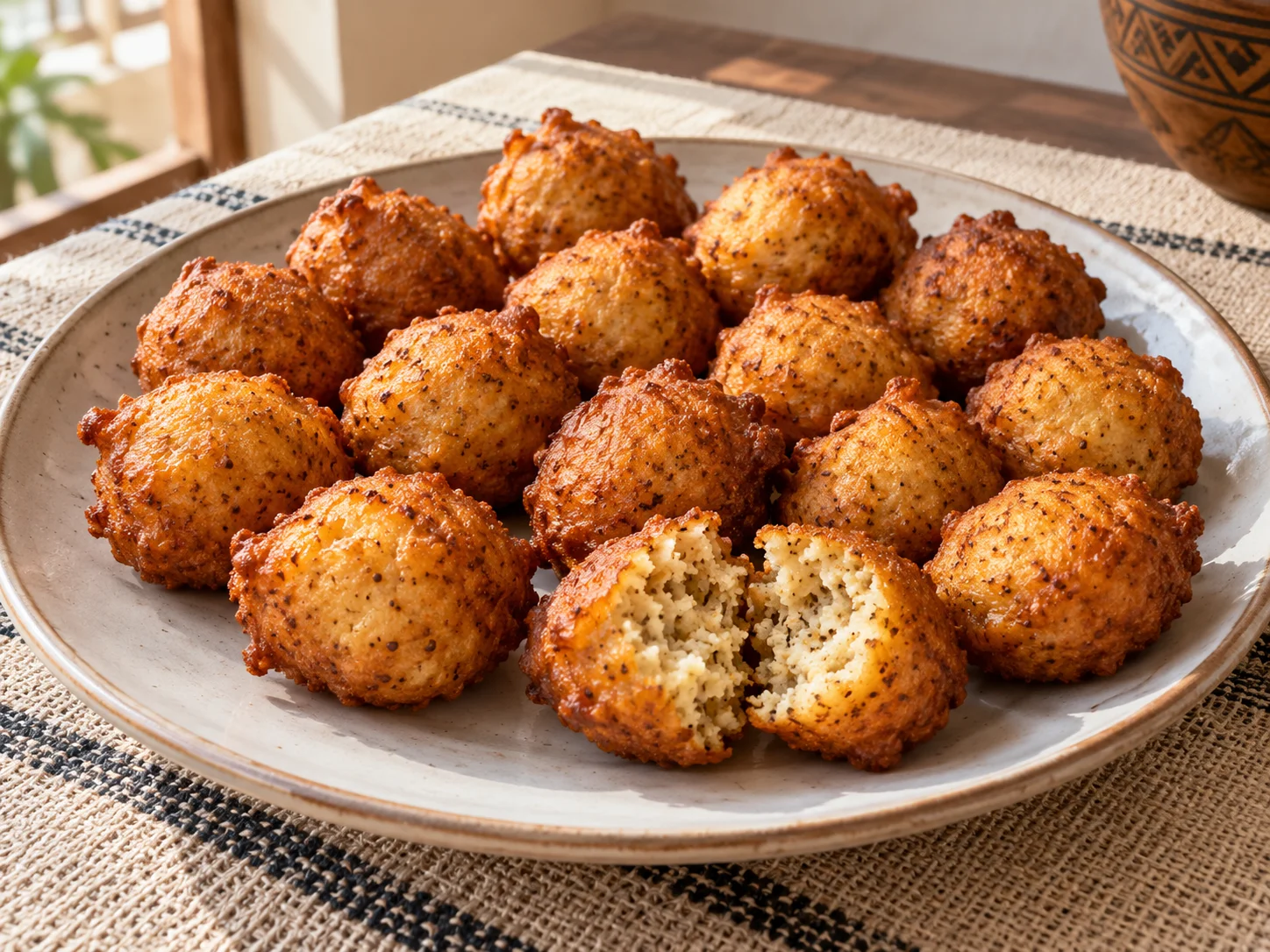
Three recipes from the site to put your knowledge into practice:
Discover these cuisines at a restaurant
Explore our restaurant and caterer directories. Choose your destination and check the establishment’s menu to confirm which dishes are offered and available.
Continue exploring
Enjoy discovering ingredients and African cuisines? Join our newsletter. The illustrated PDF 10 sauces africaines incontournables is in French and is offered after confirming a subscription to the French or bilingual edition.