African Chili
Africa
Understanding : African Chili
INTRODUCTION
Chili is one of the most powerful sensory emblems of African cuisine. Its heat, diversity, and omnipresence make it a gustatory signature common to many regions, from the Maghreb to Southern Africa, from Dakar to Zanzibar, from Nigeria to Lesotho. Behind the term “African chili” lies a rich universe of species, colors, aromas, and preparation methods that span daily cooking, vibrant street food, and haute cuisine. Rarely has a spice so embodied conviviality, cultural identity, sharing – but also rivalry and pride, with each region boasting the power or finesse of its varieties. The African passion for chili is not limited to a simple search for spiciness: it reveals a sensual, symbolic, functional, and even therapeutic relationship with food and community. This text explores the rich history of African chili, its main botanical varieties, its culinary roles, its usage techniques, its regional variations, its multiple social uses, its symbolism, and its nutritional virtues.
Where to find it
Look for the exact food-grade form required by the recipe at markets and specialist shops. Check the product name, ingredients, condition and storage instructions.
Explore further: Cooking tips · Food hygiene and safety advice.
Search Amazon.fr — affiliate link →
Check availability and delivery on Amazon.fr. Compare ingredients, packaging and sellers.
As an Amazon Associate I earn from qualifying purchases.
History and uses
1. HISTORY OF CHILI IN THE WORLD AND IN AFRICA
1.1. American origins and world conquest Chili belongs to the Capsicum genus, native to Central and South America, where it has been domesticated for over 6,000 years. There are five major cultivated chili species, the most famous in Africa being Capsicum chinense, which includes the dreaded “Scotch Bonnet” or “Habanero” chili, and Capsicum frutescens (bird's eye chili, pili-pili), as well as Capsicum annuum (sweet pepper, bell pepper). It arrived in Africa in the 16th and 17th centuries, via Portuguese navigators, who transported it from their American colonies to their African and Asian trading posts. Chili quickly supplanted older hot spices (black pepper, cubeb, grains of paradise, Grains of Selim), because it is easy to cultivate, hardy, and terribly more “spicy”. 1.2. Cultural appropriation and continental spread In less than two centuries, chili became a staple of African cuisine. Regions appropriated, acclimatized, and selected varieties adapted to the soil, climate, and local tastes. Chili takes a thousand names depending on the language: atà in Nigeria, pilipili in Central and East Africa, ndolé in Cameroon, solom or mahalap in West Africa, peri-peri in Mozambique and Southern Africa. Over time, it shaped recipes, consumption patterns, and even sociability around the fire and the market. It signifies virility, celebration, gustatory bravery, but also care and health.
2. BOTANY, VARIETIES AND REGIONS OF AFRICAN CHILI
2.1. Taxonomy and main cultivated types In Africa, three main species dominate: Capsicum chinense, including the famous Scotch Bonnet (West Indian chili), habanero, and African yellow chili. Potency between 100,000 and 350,000 Scoville units. Capsicum frutescens, or pili-pili, a very small but dazzling chili, widely used in Central and East Africa. Capsicum annuum, less spicy, often eaten green or red (sweet pepper, bell pepper). 2.2. Emblematic varieties and regional uses Scotch Bonnet / atarodo / shombo / kpakpo shito (West Africa, Caribbean, Ghana, Nigeria): plump, fragrant, burning. Pili-pili / Peri-peri (Congo, DRC, Rwanda, Angola, Mozambique, South Africa): tiny, bright red, intense. Bird's eye chili / Chombe (Cameroon, Ivory Coast): elongated and slightly curved, used fresh or dried. Green chili (Morocco, Algeria, Senegal): milder, often for couscous. Besar / Bullhorn chili (Maghreb): mild or slightly spicy, dried then ground into powder. From Guinea to Kenya, each region claims its own flavor, potency, and preparation method.
3. USAGE TECHNIQUES AND PREPARATION METHODS
3.1. Fresh, dried, fermented or pureed Fresh: fresh chili is crushed (pounded), finely chopped or simply plunged whole into the pot to flavor. This is the preferred method in maafe, yassa, tchiep, and sauces from Nigeria, Ghana, and Cameroon. Dried: whole chilies are sun-dried, then stored for the year, or ground into powder (chili powder, local paprika). Fermentation: some chilies are lacto-fermented with salt and garlic (Benin, Senegal, Ghana, DRC), yielding a tangy and complex paste. Pureed or “chili sauce”: the “harissa” of the Maghreb (Tunisia, Algeria, Morocco), Ghanaian “shito”, Nigerian “ata din din”, Central African “pili-pili condiments”, Mozambican “molho”, South African “peri-peri sauce”. These sauces combine chili, oil, garlic, lemon, spices, and sometimes tomatoes or ginger. 3.2. Culinary incorporation methods Added at the beginning of cooking: to flavor sauces, stews (e.g., Malian maafe, Cameroonian ndolé, Gambian domoda). Added at the end or at the table: hot sauce served separately, to be dosed according to taste (common practice in the Maghreb, West Africa). In marinade, to enhance grilled meats, skewers, fish (Nigerian suya, grilled chicken, yassa fish, Swahili mishikaki). In salad or condiment: East African kachumbari, Swahili kumbachari, tomato-chili salsa.
In my books

Continue exploring the continent’s cuisines with Africa at the Table — 54 countries, 54 iconic dishes, by Alioune FALL. This book is in English.
Explore further
4. AFRICAN CUISINE AND EMBLEMATIC CHILI DISHES
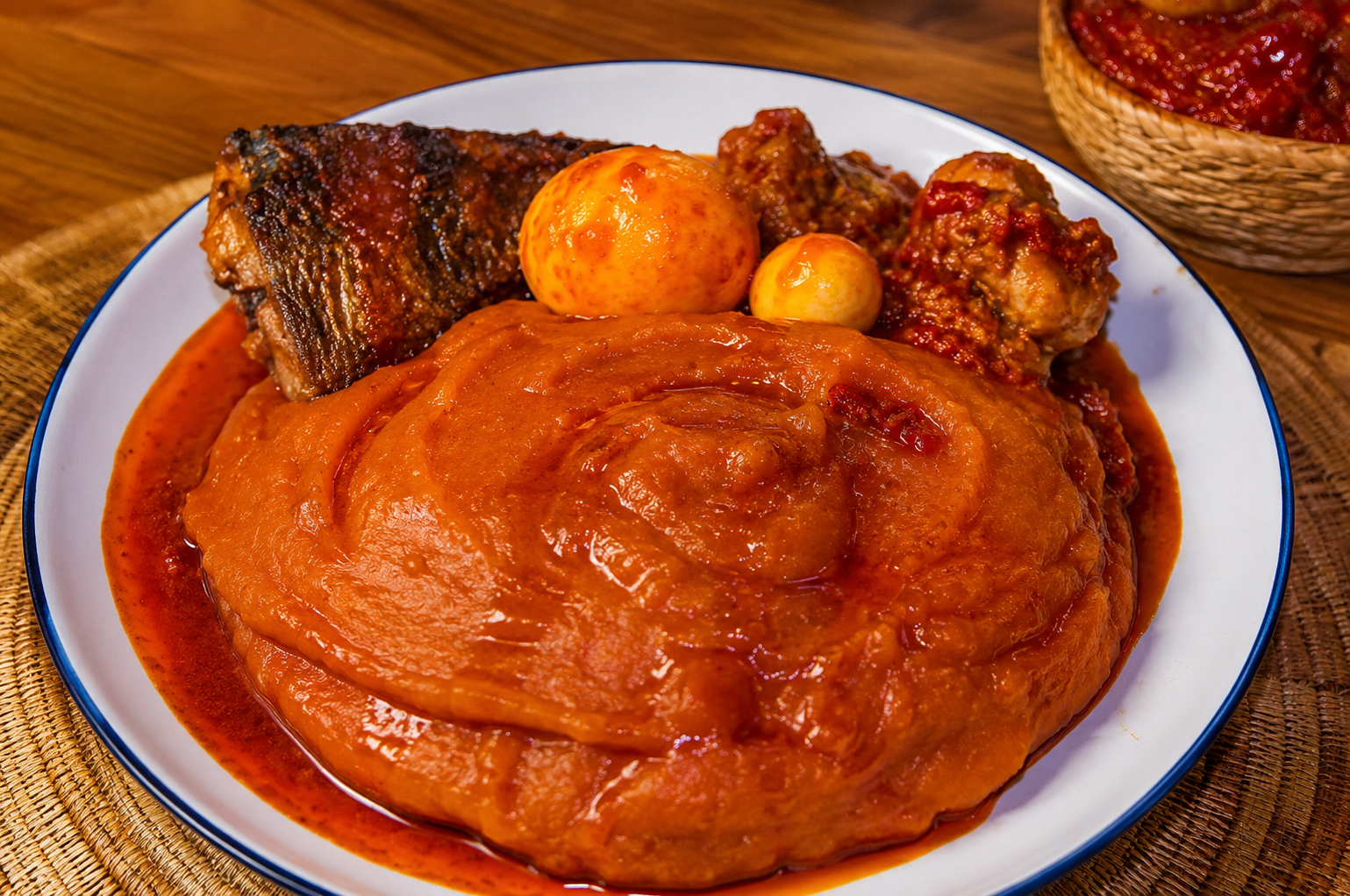
4.1. West Africa Suya / dibi / chichinga: grilled meats enhanced with a chili and spice paste (gari, peanuts, garlic). Mafe, yassa, tchiep: sauces based on tomato, onion, peanut paste are always accompanied by chili — often placed whole in the dish so that everyone can dose their heat. Homemade chili sauces (“crushed chili”): everywhere on stalls, with fish, plantains, attiéké (Ivory Coast), fonio or rice. 4.2. Central Africa Ndolé (Cameroon): bitter leaves simmered with peanut paste, meat or fish, abundantly spiced. Yellow, tomato, watermelon, pistachio sauce: chili is omnipresent, often in the form of fresh paste. Pili-pili: red or green sauces, served with fried fish, fritters, broth, beans. 4.3. East and Swahili Africa Kachumbari/Kumbachari: fresh tomato, onion, and chili salad. Curries and pilau: fresh green chili or pili-pili sauce accompanies curries, coconut rice, samosas. Street food: skewers, mishikaki, fish and chips are drenched in “chili chutney” sauce. 4.4. Maghreb Harissa: sauce based on dried chili, garlic, caraway, oil — a staple for couscous, mezze, chorbas, or Tunisian sandwiches. Tchicha / mhadjeb (stuffed flatbreads): red chili paste in fillings, in bricks, and alongside couscous. Vegetables, grilled meats or fish: chili is integrated into the marinade or presented as a puree. 4.5. Southern Africa and Indian Ocean Peri-peri: originating from Mozambique/Madagascar, magnified in South Africa (Peri-peri chicken, peri-peri shrimp). Rougail (Madagascar, Reunion, Mauritius): crushed chili with tomatoes, aromatics, accompanying all dishes.
5. SYMBOLISM, USES AND CUSTOMS RELATED TO CHILI
Chili is not just an ingredient, it is performative: Manly strength and bravery: “who eats the spiciest” contests are common, attesting to courage or… madness. Hospitality and sociability: a good host always offers a bowl or puree of chili at the communal table, conveying respect and a desire to “spice up” the guest's appetite. Protection: in some traditions, rubbing chili at the entrance protects against the evil eye. Transmission: each family, each “mama”, holds her secret for preparing THE chili sauce, passed down from generation to generation.
6. NUTRITIONAL BENEFITS AND ADVANTAGES OF CHILI
Chili, in addition to enhancing dishes: Rich in vitamin C (up to 5 times more than citrus fruits), pro-vitamin A and E, powerful antioxidants. Capsaicin (responsible for the spiciness): anti-inflammatory, analgesic, stimulates digestion, blood circulation, reduces appetite (satiety effect), fights certain microbes. Natural preservative effect (limits bacterial growth). Stimulation of satiety: useful in local diets based on tubers or cereals, by limiting overconsumption of carbohydrates. Helps with sweating: promotes thermal regulation in hot weather. Caution: consumed in excess, it can irritate the stomach, mouth, or digestive tract, especially in children or sensitive individuals.
7. CHILI, MODERNITY AND DIASPORA
Wherever the African diaspora is found, chili sauce is a marker of identity: in Paris, London, New York, Berlin, Lagos, Abidjan. From Michelin-starred restaurants to food trucks to African culinary innovators, it is revisited, aged, fermented, smoked, sweet and savory, or even incorporated into ice creams, desserts, cocktails. African chili is now sold dried, fresh or pureed worldwide — a sign of the vitality of a tradition capable of inspiring and seducing all palates.
CONCLUSION African chili is much more than a simple flavor enhancer: it is aroma, color, social bond, historical marker and local pride, a bridge between yesterday and today, a tool for health and identity expression. Its place in African cuisine is that of an everyday hero, humble or flamboyant, who gathers families around the fire, sharpens taste, heals, laughs, and challenges. From the morning porridge pot to the night's chili sauce, its ardent embrace is the heartbeat of an Africa of flavors, celebrations, and memories.
In the kitchen : African Chili
Recipes from the site to put your knowledge into practice:
Discover these cuisines at a restaurant
Explore our restaurant and caterer directories. Choose your destination and check the establishment’s menu to confirm which dishes are offered and available.
Continue exploring
Enjoy discovering ingredients and African cuisines? Join our newsletter. The illustrated PDF 10 sauces africaines incontournables is in French and is offered after confirming a subscription to the French or bilingual edition.