Smoked Fish
Africa (ancestral technique)
Understanding : Smoked Fish
INTRODUCTION
Smoked fish holds a central, profound, and multifaceted place in African cuisine. From the rivers of Senegal to the coasts of Benin, from the islands of Lake Victoria to the villages of Congo, from the Sahel to the Gulf of Guinea, this ancestral method of preservation and sublimation accompanies food traditions, women's expertise, rural economies, resilience in precarious contexts, and the expression of the continent's authentic taste. Much more than a simple ingredient, smoked fish is a marker of identity, transmission, and innovation: it finds its way into mafé pots in Mali, leaf stews (pondu, saka saka), peanut sauces, family festive tables, but also in modest daily meals, street food, and even in modern Afro-fusion creations of the diaspora. This text offers a detailed exploration of the culinary, social, economic, symbolic, and heritage role of smoked fish in Africa, shedding light on its artisanal techniques, its diversities, its nutritional contributions, its mnemonic importance, and its challenges between modernity and tradition.
Where to find it
Look for the exact food-grade form required by the recipe at markets and specialist shops. Check the product name, ingredients, condition and storage instructions.
Explore further: Cooking tips · Food hygiene and safety advice.
History and uses
1. HISTORY AND CONTEXT OF SMOKING IN AFRICA
1.1. Necessity and ingenuity of preservation In most regions of Africa, heat, humidity, the absence of refrigeration, and the remoteness of large markets necessitate rapid and effective fish preservation techniques: salting, drying, fermentation, and especially smoking. The latter not only preserves fishing surpluses but also enhances flavors, creating an aromatic palette specific to each region. Smoking – stemming from humanity's first fire-based cooking – has become a daily and ritual gesture, passed down from mother to daughter, refining techniques and adornments of the African cooking pot. 1.2. Continental spread The tradition of smoked fish is observed everywhere: • West Africa (Senegal, Gambia, Guinea, Benin, Togo, Nigeria, Ivory Coast, Ghana…) • Gulf of Guinea • River and lake regions (Lake Volta, Lake Chad, Lake Victoria, Congo River, Niger River…) • Central Africa (DRC, Gabon, Cameroon, Congo-Brazzaville) • Southern Africa and Madagascar, with variations in species, wood, techniques, and typologies.
2. ARTISANAL AND MODERN SMOKING TECHNIQUES
2.1. Choice of fish Depending on the environment: • Coasts: sardinella, horse mackerel, croaker, barracuda, capitaine, mullet, mackerel, tilapia… • Lakes/rivers: catfish, capitaine, tilapia, Nile perch, clarias, African pike, etc. • Size variety: small fish (smoked whole), large (trimmed, cut, steaks, fillets). 2.2. Initial preparation • Evisceration, washing • Salting / brining (dry or in brine, for better preservation) • Sometimes maceration (spices, lemon, herbs) 2.3. Traditional smoking • Barrel oven, open-air oven (savanna wood, palm kernel shells, mangrove, bark, sawdust) • Setup: fish is placed on grills, bamboo racks, or skewered on sticks, at a low height above embers or a gentle fire. • Partial covering to concentrate the smoke. • Variable durations: a few hours to several days depending on size (short or strong smoking, followed by more sun drying). • "Hot" smoking (cooking and smoking combined), sometimes "cold" (just flavored, for more delicate uses). 2.4. Modern developments • Metal ovens, FTT-type ovens (FAO-Thiaroye, Gambia/Senegal), allowing for homogeneous smoking, hygienic production, wood savings, and better sanitary quality. • Sometimes in parallel, freezing, packaging, modern or semi-industrial conditioning for export.
3. ECONOMIC AND SOCIAL ROLE
3.1. Actors and sectors The smoked fish sector has a very strong female component: • Women smokers: artisans, matrons, large traders (Nigeria, Ghana, Guinea, Ivory Coast), "Nana Benz of fish" • Intergenerational transmission, women's groups, port market • Indirect employment: fishermen, woodcutters, street vendors, export (Central Africa, Europe, USA, Middle East) 3.2. Markets and channels • Sale of smoked fish in all markets: retail (by piece, basket, strings), semi-wholesale, export by truck, packages for the diaspora • Cross-border trade (e.g., fish from Ghana to Niger or Mali) • Prices adapted to all budgets: from luxury pieces (capitaine, large fish) to popular sardines
In my books
Explore Senegalese cooking with Le Sénégal à table, my collection of 150 recipes, stories and traditions to share. This book is in French, by Alioune FALL.
Explore further
4. DIVERSITY AND CULINARY USES
4.1. Basis of daily cuisine • Leaf sauces (pondu, saka saka, ndolé, sauce feuille, efo riro, palava sauce) • Groundnut sauce, peanut sauce, mafé, where smoked fish brings flavor, salt, aroma, and substance • Vegetable soups, clear soups, stews, jollof rice, "one pot" dishes, imbued with the distinctive smoky note 4.2. Emblematic regional dishes • Thiéboudienne from Senegal (rice with fish, vegetables, sometimes meat and smoked fish) • Ndolé (Cameroon), Gboma dessi (Togo/Ghana) leaf sauce • Moambe (Congo, Gabon): palm oil, cassava leaves, fish, or meat and smoked fish • Ayoyo soup (Ghana) • Beans, bean sauce, red red (Ghana, Benin, Ivory Coast) 4.3. Snacks, street food • Whole smoked fish sold hot in markets (sardinella, tilapia, mullet, horse mackerel), eaten by hand or with bread, attiéké, plantain, akyeke, at any time of day • Spicy, marinated smoked fish skewers, neighborhood snack • Pounded fish to enhance sauces, soups, purees (with added onions, chili, tomato, oil) 4.4. Festive or ritual dishes • Funeral meals, family banquets, initiation feasts, harvest ceremonies • The "choice piece" offered to a guest, chief, or elder, as a sign of respect
5. NUTRITIONAL AND HEALTH ASPECTS
• High biological value animal proteins: essential when meat is scarce or expensive • Omega 3 and 6 (for fatty fish, sardine, mackerel), good protective lipids • Minerals: calcium (with fine bones), phosphorus, potassium, magnesium • Salt: caution regarding excess in very salty smoked products • Vitamins: B12, A, D, for growth, immunity, anemia • Long preservation without refrigeration reduces food dependence, promotes rural security
6. SOCIAL, CULTURAL, AND SYMBOLIC PLACE
6.1. Transmission, feminine, memory, and rituals • Role of women: heritage, expertise, kiln cooking ("the hand in smoking"), organization into cooperatives, market networks, social status ("good smoker," "chief's smoker") • Role in rituals (dowry, gift, reconciliation, funerals, ancestral ceremony) 6.2. Culinary identity and resistance • A more "African" cuisine with the flavor of the forest, river, sea, against the standardization of taste (bouillon cube, industrial) • Dish of the poor and the rich, trans-class food, neighborhood bond • "Taste of Africa" in the diaspora: smoked fish in luggage, shipments, exotic grocery stores, Afro-fusion dishes 6.3. Synonym of hospitality and celebration • Piece of smoked fish = "host's gift," "blessing of the dish," "joy of meeting" • Served first in the communal dish, chief's embrace, matriarchal bond
7. MODERNITY, CHALLENGES, AND INNOVATIONS
7.1. Sectors and modernization • Professionalization (FTT ovens, hygienic standardization, packaging) • Fight against deforestation (timber, ecological alternatives) • Food safety (aflatoxin risks, salinity control, storage in urban areas) 7.2. Culinary innovation and diaspora • Food fusion: croquettes, risotto, burger, pâté, ravioli with smoked fish sauce • Inclusion in vegan cuisine (smoked mushroom leaf), healthy modernization, premium export 7.3. Social and environmental issues • Inclusion of women, economic emancipation, short supply chains, fair markets, heritage valorization ("smokers of the Gulf of Guinea") • Balance between production, mass consumption, private, public, halieutic biodiversity
CONCLUSION Smoked fish is the aromatic soul, the feminine hand, the gustatory memory, and the nutritional foundation of African cuisine. Its wild, powerful aroma transcends time, connecting daily life to celebration, modesty to excellence, village childhood to the urban or export plate. Preserving, innovating, and transmitting the art of smoked fish means defending food sovereignty, hospitality, women's craft, and Africa's resilient creativity, today and tomorrow.
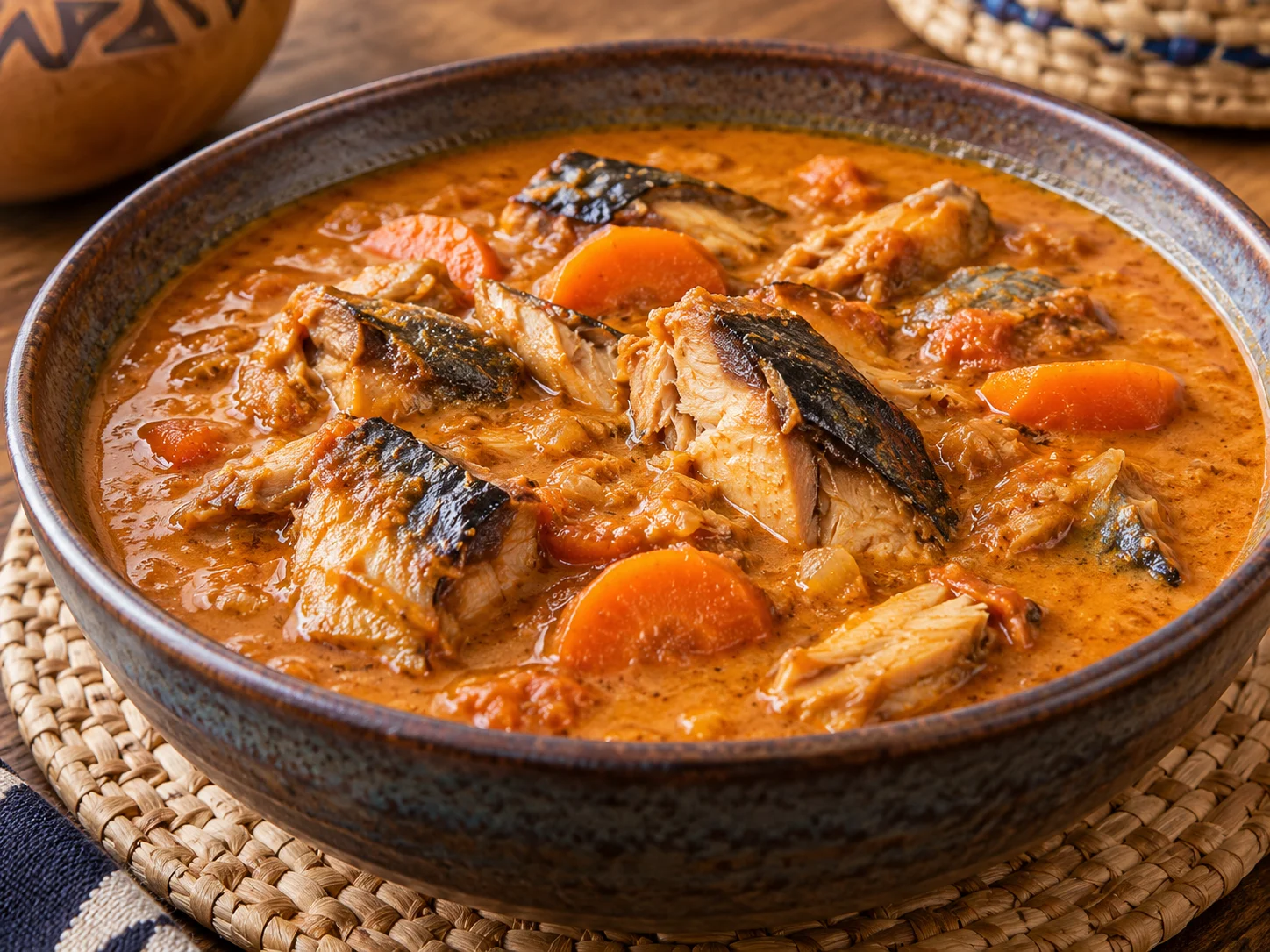
In the kitchen : Smoked Fish
Recipes from the site to put your knowledge into practice:
Discover these cuisines at a restaurant
Explore our restaurant and caterer directories. Choose your destination and check the establishment’s menu to confirm which dishes are offered and available.
Continue exploring
Enjoy discovering ingredients and African cuisines? Join our newsletter. The illustrated PDF 10 sauces africaines incontournables is in French and is offered after confirming a subscription to the French or bilingual edition.