Malawah
Somalia
Editorial collection: RecettesAfricaines.com · Publication director: Alioune FALL.
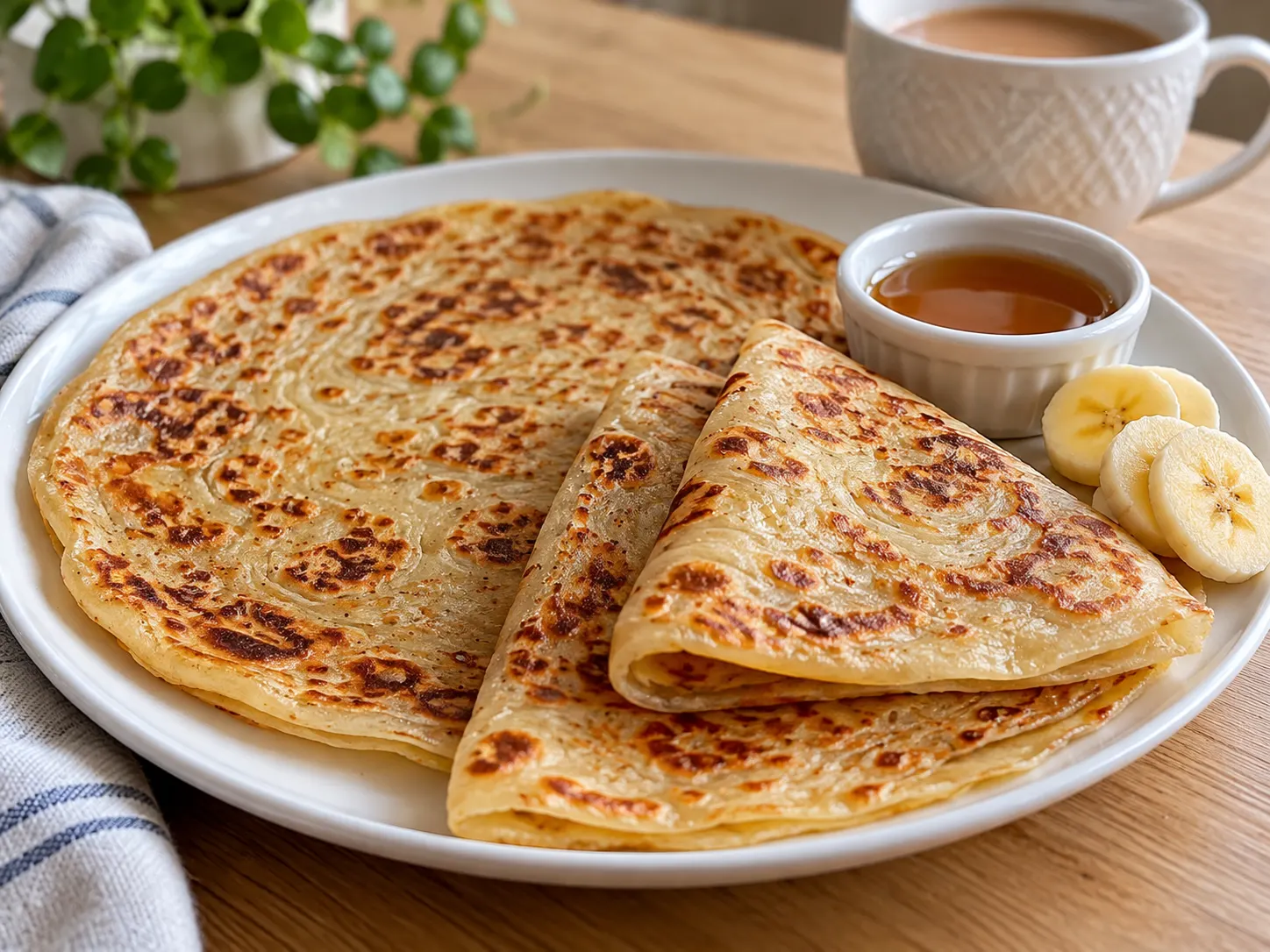
A Somali pancake with several uses
Malawah, also written malawax, is a Somali preparation made by spreading batter into a thin layer on a hot cooking surface. Comparing it with a pancake helps explain its shape, but does not replace its own name or eating context. It can take a sweet accompaniment or form part of a savoury meal. Its supple texture and cooking method therefore explain more than simply assigning it to desserts. A stack of malawah, a folded pancake and a portion served with stew show different uses of the same food. None of these presentations, taken alone, is a universal definition of the preparation.
What the testimony establishes
Leila and Abdullahi, the authors of Xawaash, distinguish a simple flour-and-water preparation from enriched versions containing ingredients such as milk, eggs or fat. They also discuss sweet and savoury ways of serving it. Their reflection on a possible Horn of Africa origin for pancakes remains an explicitly proposed hypothesis, rather than historical proof. The Atlas does not turn it into a birth date or a claim of national exclusivity. Thin, round preparations occur in many cuisines, and visual similarity does not demonstrate descent. Their testimony documents Somali practices and how they evolve, which is valuable cultural information without requiring a definitive invention story.
Pourable batter rather than layered dough
The batter's fluidity is an initial technical reference. It allows a relatively thin layer to form without rolling out a piece of dough. Consistency depends on flour and liquid, but also on resting and any enriching ingredients. Egg changes how the mixture sets under heat; milk supplies additional solids and aromas that differ from those of water alone. These explanations clarify variations without prescribing one recipe. An enriched malawah does not invalidate a simpler version. Above all, a description should not automatically specify milk and eggs when only the food's name is known. Ingredient lists and the chosen version remain necessary to explain its particular structure.
Spreading and controlling the heat
A regular pancake requires batter that can spread before setting. The surface temperature, the movement of the pan or utensil, and the amount of batter explain differences in thinness. Malawah is therefore more than an ingredient list: it depends on coordinating flow and setting. An excessively hot surface can colour some areas very quickly, while a thicker layer retains more moisture. Cooking patterns help describe the result but do not establish a country of origin or one particular appliance. A dictionary entry makes the gesture understandable without turning it into a numbered cooking method. It also explains why a familiar outline can conceal appreciably different textures.
Flexibility, colour and mouthfeel
Malawah commonly has a supple texture that allows it to fold. Its surface shows more or less browned areas, while its centre remains tender. Thickness changes the experience: a very thin pancake feels light and delicate, whereas a slightly thicker one offers more substance. Edges may dry further when exposed to heat for longer. Such variations are not automatically defects. Intended use matters: a pancake supporting a filling does not necessarily answer the same needs as one eaten alone. Words such as supple, thin, tender and golden are most useful when tied to what is actually observed, rather than treated as compulsory specifications.
Sweet servings and savoury servings
Sugar and clarified butter are documented pairings, but malawah also accompanies savoury dishes. Classifying it solely as pastry would therefore be restrictive. When served sweet, warm batter contrasts with melting fat and sugar crystals. In a savoury setting, the pancake may accompany sauce, meat or pulses, depending on the meal. Heat then often comes from the accompaniment, rather than defining the pancake itself. For someone encountering the name, separating the base from its topping avoids attributing the flavour of a single photographed plate to every malawah. It also explains why apparently similar pancakes can occupy different places within a meal or be eaten with quite different dishes.
A table food and a skill passed on
A seemingly simple preparation can require a fine understanding of heat, batter and the rhythm of a meal. The cook may adjust consistency after observing the first pancake, or change thickness for the intended accompaniment. Passing on that judgement is as important as transmitting a written quantity. Breakfast, hospitality and breaking the fast are possible contexts, not reasons to assume every serving is identical. Diaspora families may adapt equipment and available ingredients. Naming these adaptations describes a living cuisine instead of opposing an imaginary fixed tradition to every contemporary change. It also recognises the practical knowledge involved in preparing a familiar food consistently for others.
Malawah, sabaayad and anjero
Malawah and sabaayad may both look flat, but they are constructed differently. Sabaayad involves dough that is stretched, greased and folded to create layers. Malawah relies on batter spread as a pancake. Anjero has further characteristics of fermentation and an open, aerated structure. These differences explain more than a comparison of colour alone. They also show why the breads do not respond identically to sauce. Properties belonging to similarly named preparations elsewhere should not simply be transferred to Somali malawah. A shared word or broad resemblance invites comparison, while the actual ingredients, gestures and serving practices establish the distinctions worth retaining.
Reading a recipe and its illustration accurately
The linked recipe describes a particular example, not the compulsory composition of the term. Compare versions by noting the liquid, enrichment, visible thickness and chosen serving. An image cannot always reveal milk, eggs or the kind of fat, so those details require a verified ingredient list. Allergen questions likewise depend on actual composition rather than a traditional name. The entry supplies distinctions and vocabulary; the references lead to attributed testimony. Together, they allow exploration of malawah without copying a recipe or inventing a closed history. A cook's description of the name used within their family can illuminate differences that an isolated photograph would leave unclear.
Explore further
Sources and review
Consulted and reviewed on 19 November 2026.