Muufo
Somalia
Editorial collection: RecettesAfricaines.com · Publication director: Alioune FALL.
Definition and place in the meal
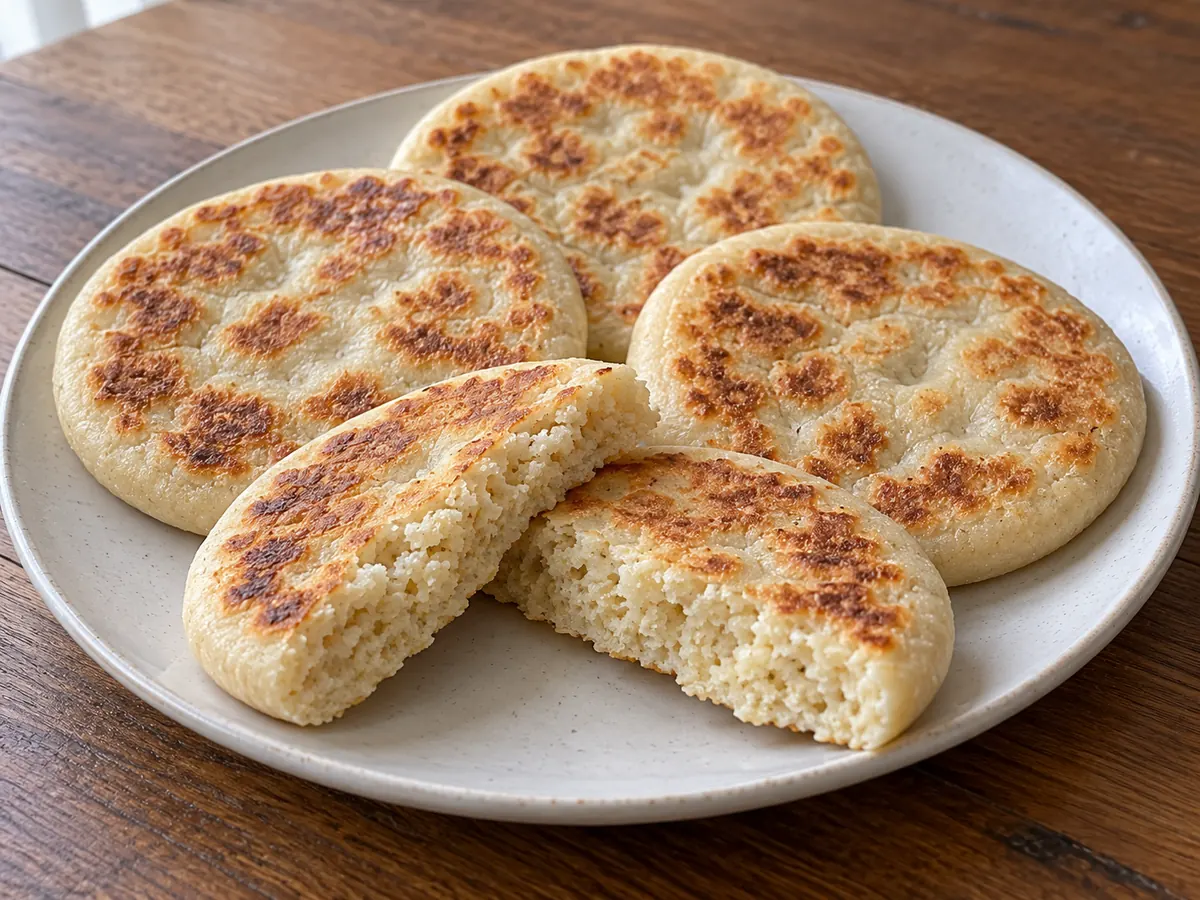
Muufo is a Somali bread whose maize-based versions are an important reference, without representing the full diversity of breads eaten in Somalia. It accompanies savoury dishes and can be broken into pieces to scoop up cooking juices or sauce. Its definition rests on cereal dough made into bread, rather than boiled grain served as an accompaniment. Understanding it therefore means considering the raw material, the resulting structure and its use at the table together. A photograph of golden flatbreads shows one possible presentation; it cannot by itself establish the method, the precise place of preparation or the history of the practice pictured.
Names, variants and historical caution
Somali authors Leila and Abdullahi, who publish Xawaash, document the names muufo and muufo tinaar. They present their proposed connection with Arabic oven names as a personal theory, which must not become an established etymology. That distinction matters in an atlas intended to transmit knowledge without inventing a genealogy. Related words or utensils suggest questions for further research; they do not prove a single journey or identify an inventor. The name also travels with families and diaspora restaurants. Its presence on a present-day map records where a food is prepared, rather than marking a boundary beyond which the bread would somehow become illegitimate.
The oven and household adaptations
Xawaash distinguishes traditional bread cooked in a clay oven called a tinaar from its pan-cooked adaptation. These settings do not transfer heat in exactly the same way. An oven heats more of the dough at once; a pan primarily heats one side at a time and calls for a different approach to thickness. An adaptation is not necessarily a decline in quality: it makes a food achievable with available equipment. It should, however, be identified. Presenting every pan-cooked flatbread as an exact representation of tinaar baking would obscure the skill involved. The entry therefore retains the bread family while specifying the method when known, rather than confusing tradition, reconstruction and a convenient household version.
Understanding the dough without copying a recipe
Maize and wheat do not build dough in the same way. Combining them, where a version does so, changes flexibility, cohesion and the way the bread breaks. Milling also affects texture: very fine flour and a visibly granular meal do not give the same bite, even under a shared name. The water available to the particles and the resting time influence how evenly the dough comes together. These are ways of understanding differences between two muufo, not compulsory proportions. Yeast in an adaptation should be mentioned when documented; its presence does not establish that every bread bearing the name undergoes an identical fermentation.
Reading the cooking and texture
Colour alone does not determine whether a bread is well cooked. A strongly browned surface may conceal a moist centre, while a paler bread may be properly cooked for its flour and thickness. Describing muufo can involve looking at the evenness of its crumb, whether it separates without becoming powdery, and how its crust yields between the fingers. Brown marks indicate areas of stronger contact or heat; they are not certificates of authenticity. A pliable flatbread and a thicker loaf may suit different uses. A useful entry describes what can actually be observed rather than requiring every example to have one fixed outline or appearance.
Sensory character and pairings
The principal flavour reference is cereal, with more toasted notes on browned areas. The natural sweetness of maize, when it predominates, is not the same as added sugar. Fat, if included, changes the mouthfeel and how aromas are perceived. At the table, sauce brings moisture, salt, acidity or heat to a bread whose own flavour may remain relatively restrained. That restraint has a purpose: it allows the accompanying dish to remain expressive. Calling muufo invariably sweet, buttery or spicy would erase these differences. It is more useful to specify whether the serving highlights a crisp crust, tender crumb or the bread's ability to absorb cooking juices.
Eating gestures and the transmission of skill
Breaking bread is not simply cutting it without a knife. The size of the piece, its flexibility and its capacity to carry a filling all contribute to the meal. A culinary dictionary should describe such gestures as carefully as kneading techniques, without making them compulsory for every family. The same food may arrive whole, already divided, or incorporated into another preparation. Household knowledge also includes judgements that resist precise measurements: sufficiently supple dough, a surface browned enough, bread that breaks as intended. Explaining those judgements helps the reader understand the food without claiming to replace the experience of the person cooking it.
Distinctions from neighbouring preparations
Muufo is not maize porridge, even when both foods use the same cereal. It also differs from sabaayad, whose folding and fat create layers, and from malawah, generally spread as a pancake. Anjero involves another balance of batter and fermentation. These comparisons organise understanding rather than rank the breads. Adding maize to an arbitrary dough is not enough to make it muufo; equally, a clearly explained adaptation can retain a meaningful cultural connection with the name. Identity emerges from the combination of the food, the skill and its use, rather than from a single ingredient taken out of context.
Observing, choosing and continuing the exploration
To compare two examples, ask which cereal is specified, what equipment was used and how the bread will be served. Then describe thickness, graininess and the relationship between crust and crumb. This avoids judging solely by resemblance to a bread familiar elsewhere. Dietary questions depend on actual composition: wheat-containing versions contain gluten, while milk or egg cannot be inferred from the name alone. The linked recipe provides one concrete example with its ingredients; this entry explains cultural and technical reference points. Dated sources invite further enquiry rather than claiming to settle every Somali variation. A cook's own description can clarify distinctions that a photograph cannot reveal.
Explore further
Sources and review
Consulted and reviewed on 19 November 2026.