Sabaayad
Somalia
Editorial collection: RecettesAfricaines.com · Publication director: Alioune FALL.
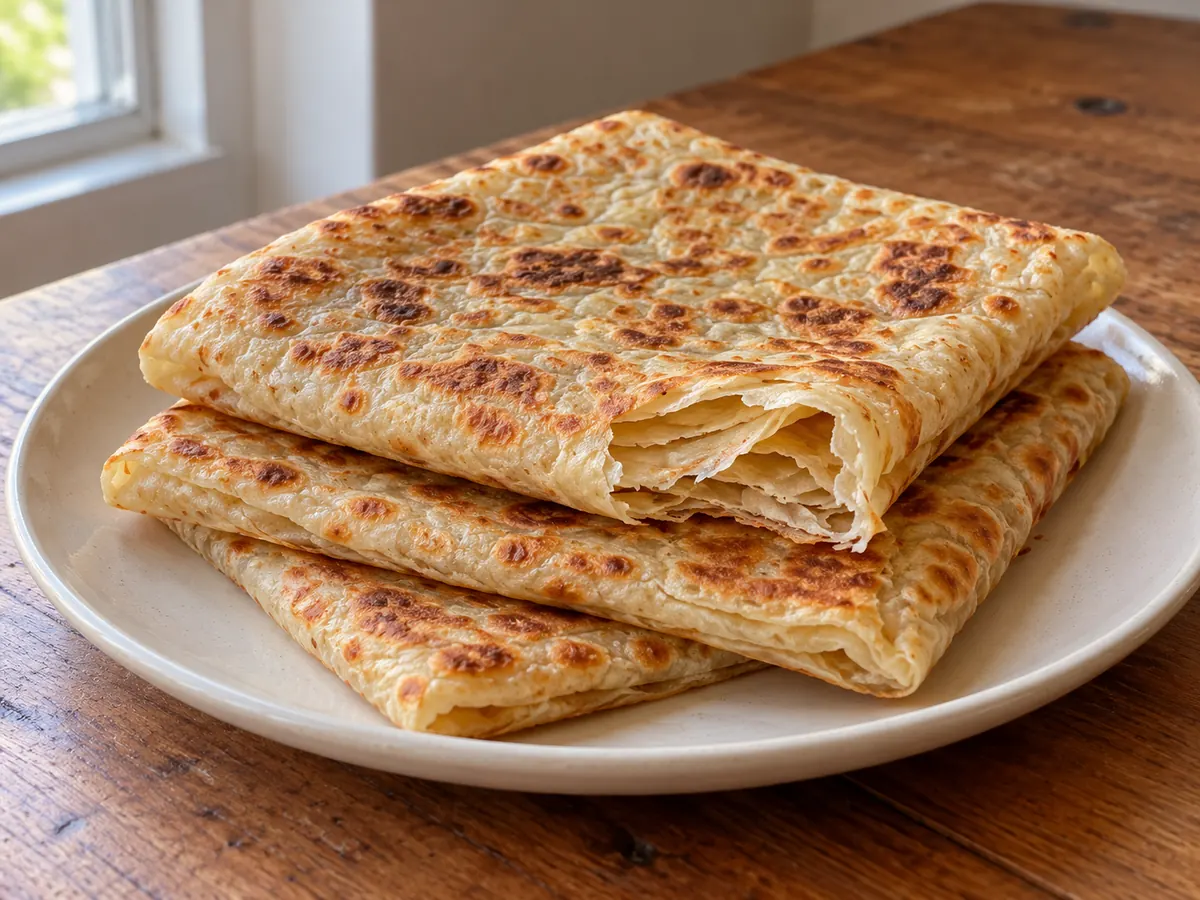
A flatbread identified by its layers
Sabaayad is a Somali flatbread generally made from dough that is worked, stretched and folded before cooking on a hot surface. A resemblance to chapati does not define it fully: layering is a more useful reference. When the bread is broken, thin layers separate and feel different from a compact flatbread. A browned face may retain softer areas suited to sauces and fillings. The name therefore refers both to a table food and to a dough-working skill. Its use is not limited to one filling or one time of day. Understanding its construction explains more than assigning it a single outline or colour.
Somali practice within a wider area of exchange
Xawaash compares sabaayad with paratha rather than thin Indian chapati. Its authors describe a lightly crisp exterior, tender layered interior and several uses in Somali meals. Their testimony locates the preparation without claiming to trace one migration between continents. Comparisons with other East African and Indian Ocean breads highlight technical similarities; they do not establish a dated borrowing or identify an inventor. Families' and cooks' own vocabulary should remain central. A name can accompany changes in ingredients or equipment, while related names may refer to differently constructed doughs. Recognising these possibilities permits useful comparison without replacing the bread's own identity with that of another preparation.
Stretching, resting and dough strength
Making sabaayad calls for dough that can extend without immediately tearing. Resting is more than waiting between gestures: it helps previously worked dough become easier to handle and allows more even hydration. Overly resistant dough may shrink back, whereas fragile dough tears and compromises the intended layers. Flour and any enriching ingredients influence this behaviour. Some documented versions combine flours or include egg; this variety should not be reduced to a compulsory formula. The aim remains a sufficiently cohesive dough to be thinned, folded and cooked while retaining structure. The entry explains these relationships without prescribing the quantities of a particular household recipe.
Fat as a separator between layers
In this kind of bread, fat is not merely seasoning. Spread between dough surfaces, it helps keep them relatively separate during shaping and cooking. The thickness and evenness of those films, together with the folds, affect the layering that can be perceived. This does not make sabaayad equivalent to European pastry puff dough, with identical constraints and aims. A useful description explains the shared principle of separation without erasing differences in technique. Depending on the serving, the bread may seem richer, drier on its surface or softer overall. Those sensations alone cannot identify which fat was used; composition still requires reliable information.
Contact cooking and the balance of thickness
The hot cooking surface acts first on the face touching it. Turning spreads the cooking, while internal moisture contributes to the development of layers. Attractive colour does not guarantee that the centre has reached the intended texture. A thicker piece requires a different balance between surface browning and cooking through. Excessive pressure after shaping may also alter the structure that was intended to remain perceptible. Such observations explain why breads from similar dough can differ considerably. They do not replace practice or the linked recipe's directions. Skill consists in reading the dough's response to heat rather than simply reproducing a geometric shape on the work surface.
Flavour, feel and contrast with sauce
Sabaayad commonly offers notes of cooked flour, fat and browned surface. Some versions are lightly sweet, without automatically becoming pastry or dessert. Touch is also part of the appeal: an edge may break slightly while the middle folds easily. Sauce gradually moistens the bread and accentuates contrasts between layers. A very liquid sauce and a denser filling do not interact with the dough identically. Describing the serving therefore helps explain the intended texture. It is more accurate to say layered bread with a particular accompaniment than to give every sabaayad the spicy flavour of a nearby stew. The bread and its partner retain distinct roles.
Hospitality, meals and family adaptations
Xawaash's Somali authors discuss meals with stews and occasions involving guests. These are practices attested through their experience, not a timetable imposed on every household. Sabaayad may demand more shaping work than a pourable-batter bread, helping explain its place in certain carefully prepared meals. In diaspora settings, available flours and cooking surfaces can change. Living transmission often preserves judgement about flexibility and layering rather than one indispensable appliance. Adaptations deserve description without automatic dismissal, while a recent convenience should not be presented as the only method historically used in Somalia. Recording the distinction respects both continuity and the practical choices of contemporary cooks.
Useful distinctions in the dictionary
Sabaayad differs from malawah through working and folding dough, rather than simply spreading a liquid batter. It differs from muufo through a structure in which layering is especially significant, while muufo involves other relationships between cereals and cooking methods. Photographs cannot always establish these distinctions. A folded bread can hide its internal structure, and a filling may cover most of its surface. Comparison should therefore combine the stated name, known technique and appearance when broken or cut. Chapati and paratha remain helpful comparisons rather than universal synonyms. The purpose is to make the different constructions understandable, not to prescribe one vocabulary for every local use.
Observing and reading a well-documented example
When discovering sabaayad, observe how it breaks, the layers that can be perceived and the balance between a browned surface and tender centre. A little sauce can reveal how the bread changes without immediately losing its structure. These sensory references do not impose a single way of eating. Actual composition is still needed to establish gluten, milk, egg or the kind of fat. An illustration may show the bread without proving those invisible ingredients. The linked recipe supplies a workable example; sources place it within wider cultural practice. Keeping those roles distinct avoids confusing documentation with exclusive authenticity or turning one serving into the definition of every version.
Explore further
Sources and review
Consulted and reviewed on 19 November 2026.