Sorghum
Ethiopia/Sudan
History meets tasting
Historical and cultural context
FAO places early sorghum cultivation in northeastern Africa, around the Ethiopia–Sudan area.
Sensory guide
Milling and cooking change texture: fine flour for porridge, whole grain for more chew.
Skill to observe
Distinguish whole grain, grits and flour: hydration and texture differ.
Indicative sensory descriptions: variety, fermentation, cooking and accompaniments change the result. Catalogue illustrations, not a shared botanical scale.
FAO · Sorghum and millets in human nutritionUnderstanding : Sorghum
INTRODUCTION
Sorghum (Sorghum bicolor), sometimes called great millet, red millet, feterita, masago, dare, dawa dawa, nyo, mapira, or guinea-corn depending on African languages and regions, is one of the continent's oldest and most important cereals. Originating in Africa, adapted to drought and various soil types, capable of feeding both humans and livestock, fermented, boiled, grilled, or processed, sorghum has structured the diet, culture, economy, and identity of semi-arid and tropical Africa for millennia. Whether in the form of grains, flour, porridge, bread, couscous, beer, or flatbread, sorghum accompanies societies through the intelligence of its local transformations, its ability to connect rituals and daily life, traditions and modernity, memory and innovation. This detailed description explores the history of sorghum, its diversity, production, countless uses, nutritional importance, social and ritual dimensions, contemporary challenges, and its vitality in African cuisine.
Where to find it
African grocery shops and international food aisles are good starting points. Check which form the recipe needs: whole grain, flour, semolina or a precooked product. Cooking times vary.
Explore further: Cooking tips · Food hygiene and safety advice.
Search Amazon.fr — affiliate link →
Check availability and delivery on Amazon.fr. Compare ingredients, packaging and sellers.
As an Amazon Associate I earn from qualifying purchases.
History and uses
1. ORIGINS, HISTORY, AND BOTANICAL DIVERSITY
1.1. African origins and domestication Sorghum is one of the very first cereals domesticated by humans, approximately 6000 years ago, probably in the Sahel region — northeastern Nigeria, Chad, Sudan, Ethiopia — from wild sorghum. Some believe that the Blue Nile and eastern Chad were home to the founding populations. Archaeobotanical excavations attest to the cultivation of ancient sorghum from antiquity along the Nile and in the Niger bend. Sorghum very early became a staple food in all areas facing climatic variability — Sahel, Sudanese savanna, semi-arid regions of Kenya, ancient Egypt, the Horn of Africa, Southern Africa, and later, India and Southeast Asia (via the spice route). 1.2. Botanical diversity and cultivated varieties Africa is home to the greatest genetic diversity of sorghums: • Sorghum bicolor (main domesticated subspecies) • Sorghum caudatum, durra, guinea, kafir, feterita, bicolor, margaritiferum… • Varieties with red, white, yellow, black, brown grains, with or without tannins (tannins limit digestibility without prolonged cooking) • Popcorn, sweet (sweet stem for sorghum syrup), forage, dual-purpose types. This diversity has allowed the crop to adapt to all African terroirs, from Niger to South Africa, from Mozambique to Mauritania, from Uganda to Ethiopia.
2. AGRICULTURAL CYCLE, FARMING TECHNIQUES, AND ECONOMY
2.1. Robustness and agricultural impacts Sorghum is the most drought-resistant cereal: it grows where corn and sometimes millet fail, thanks to its deep roots, thick cuticle, and ability to halt growth during water stress. Its cultivation requires only 400-600 mm of water/year, tolerates acidic, poor soils, heat, and moderate pest and disease attacks. Highly adaptable, it is included in all subsistence farming associations (sorghum and cowpea, sorghum and peanut, sorghum and millet, rotation with cotton, peas…). 2.2. Techniques and local economy • Sowing: after the first rains, broadcast or in rows • Weeding: 1 to 2 times depending on the cultivation method • Harvest: in panicles, manual threshing or by mill • Storage: grains resistant to pests, long-term storage possible (granaries, silos, bags) Mainly cultivated by small farmers, it structures local markets for grains, flours, porridges, and traditional beers. Sorghum, less subject to global market fluctuations than wheat or rice, offers resilient food security and a source of rural savings.
3. USES AND CULINARY DIVERSITY
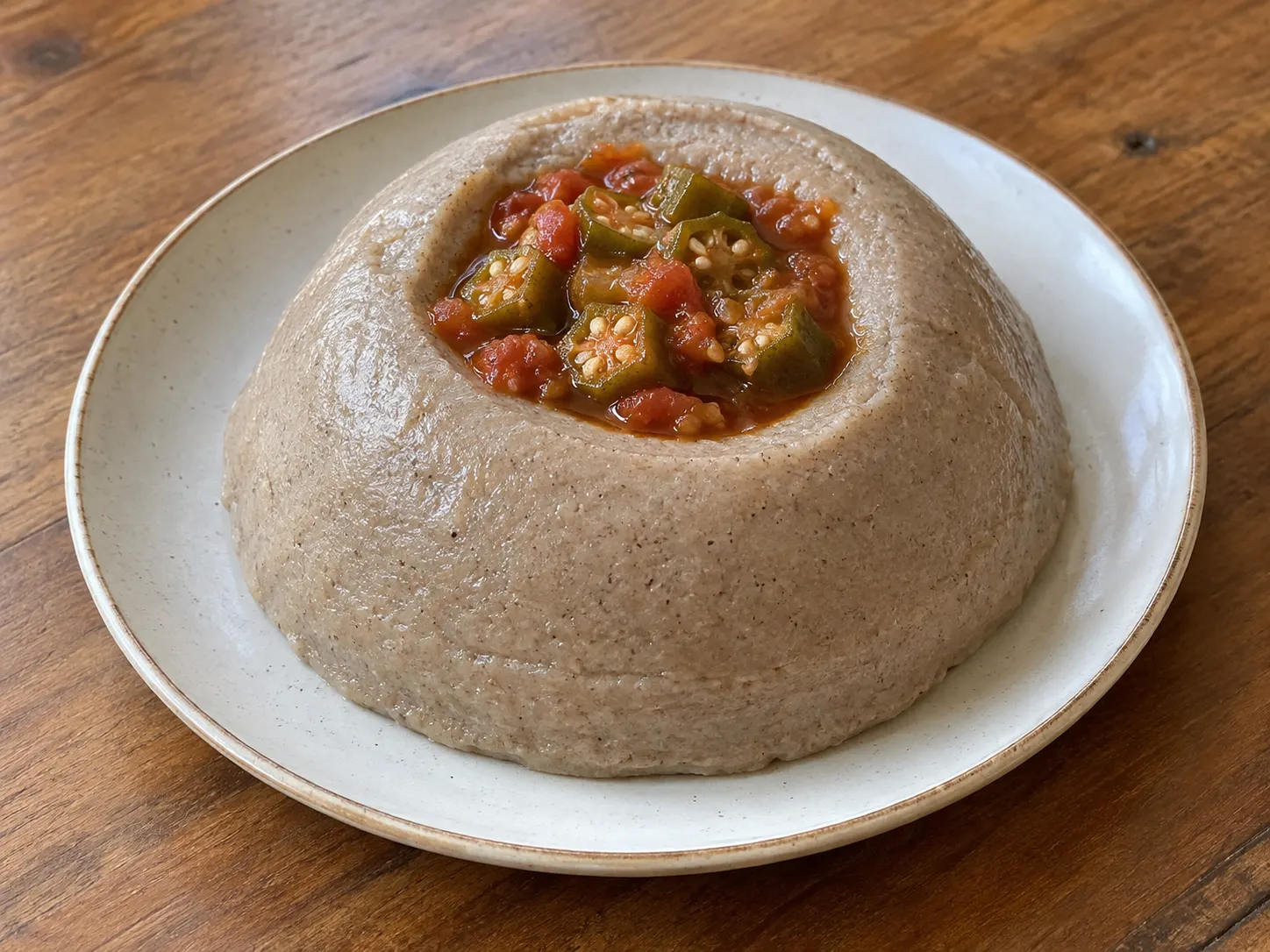
3.1. Daily food Sorghum feeds hundreds of millions of people on the continent through the diversity of its preparations: • Sorghum flour or semolina: base for countless porridges (pap, koko, ogi, tuwo, Ramadan porridge in West Africa, breakfast porridge), ideal for children, the elderly, and convalescents. • Tô/Foufou/Hadere/Kenkey: water-cooked paste, served in balls accompanying leafy sauces (baobab, amaranth), stews, fish, peanuts. These dishes are shared with family, eaten by hand. • Flatbreads (masa, injera in Ethiopia), flatbreads, crepes, sorghum chapati. • Sorghum couscous: rolled, steamed over broth. • Puffed sorghum grains / sorghum popcorn for snacks. 3.2. Festive and ritual dishes • Ramadan porridges, Muslim or Christian celebrations. • Traditional beer (dolo, tchouk, burukutu, merissa, pombe, umqombothi), a fermented communal drink, base for rites, funerals, festivals, initiation rites. • Foods for rites of passage, ceremonies (widow's departure, initiation, funerals). • Flatbreads, cakes, biscuits prepared during large markets, bazaars, or national holidays. 3.3. Modern urban cuisine • Gluten-free breads, cakes, croquettes, salads, cereal bars, “craft/urban” beer, instant couscous.
In my books

Continue exploring the continent’s cuisines with Africa at the Table — 54 countries, 54 iconic dishes, by Alioune FALL. This book is in English.
Explore further
4. SOCIAL, SYMBOLIC, AND IDENTITY PLACE
4.1. Food of resilience and sharing Sorghum is synonymous with “grain of patience,” a pivot of food security. It carries the symbol of sharing — the central tô ball around which the family gathers, the communal beer calabash that seals peace, the porridge offered to the first morning visitor, the flatbread of the broken fast shared together. 4.2. Transmission, knowledge, and gender Women lead the sorting, grinding, fermentation, and cooking: know-how transmitted from generation to generation, a criterion of social appreciation. Knowledge, anecdotes, and riddles about sorghum accompany transmission from field to bowl. 4.3. Ritual and sacred status • Offerings to ancestors: sorghum grains, beer, porridge • Funeral dishes, births, weddings, acceptance of strangers. • Sacred grains in masks, ornaments, ritual objects
5. NUTRITIONAL VALUE AND HEALTH IMPACT
5.1. Composition • Complex carbohydrates: 70 to 75% • Proteins: 8-12%, average quality (supplemented by beans or legumes) • Dietary fiber: rich, digestible • Minerals: Iron, phosphorus, potassium, zinc, magnesium, calcium. • Vitamins: B1, B2, B3, E, antioxidants (phenolic, tannins) • Gluten-free: suitable for intolerant individuals and alternative cuisines 5.2. Health benefits • Moderate glycemic index, satiating, good for diabetes management • Fibers beneficial for transit, satiety, prevention of digestive cancer • Pigmented grains (red, black) containing more antioxidants. 5.3. Limitations • Some sorghums rich in tannins/raw pose digestibility problems (destroyed by fermentation, prolonged cooking) • Possible deficiency in amino acids lysine, tryptophan (corrected by cereal+legume supplementation) • Consideration of mycotoxin risks in humid storage.
6. MODERNITY, ECONOMY, AND PROSPECTS
6.1. Valorization and revival • Rise of “eat local” policies: subsidies, local processing chains, urban short circuits. • Innovation (sorghum bread, cakes, crackers, instant couscous), organic markets, growing demand in the Afro diaspora and among consumers concerned with health or alternative cuisine (gluten-free). • Urban craft beer based on sorghum, revival of the drink for young urban dwellers. 6.2. Resilience in the face of crises • Resistance to climatic hazards (drought, heatwave), possibility of relocating production. • Long storage, adaptation to humanitarian crises, an asset against food insecurity. 6.3. Issues and challenges • Lack of interest among young people for sorghum in some urban areas (preference for rice, bread, wheat flour). • Varietal improvement, conversion to agroecology, pest control (striga, granary insects) • Modernization of processing tools to lighten women's work and improve quality.
CONCLUSION Sorghum is much more than a cereal: it embodies the strength, patience, plurality, creativity, and resilience of Sahelian and savanna Africa. A grain of sharing, ritual, daily food, and celebration, it structures collective life, connecting the past, present, and future of African cuisine. Preserving, transmitting, and reinventing sorghum in the plate as in the field means guaranteeing food sovereignty, health, diversity, memory, and the future for an entire continent.
SUMMARY: Sorghum, a cereal native to Africa, has structured the diet, rituals, and economy of African societies for millennia. Versatile, nutritious, and resilient, it is found in everything from millet bread to traditional beers, plays a vital role in food security, and stands at the crossroads of African traditions and gastronomic modernity.
In the kitchen : Sorghum
Three recipes from the site to put your knowledge into practice:
Discover these cuisines at a restaurant
Explore our restaurant and caterer directories. Choose your destination and check the establishment’s menu to confirm which dishes are offered and available.
Continue exploring
Enjoy discovering ingredients and African cuisines? Join our newsletter. The illustrated PDF 10 sauces africaines incontournables is in French and is offered after confirming a subscription to the French or bilingual edition.