Apricot Glaze (Abricoter)
French
Editorial collection: RecettesAfricaines.com · Publication director: Alioune FALL.
Definition and Scope
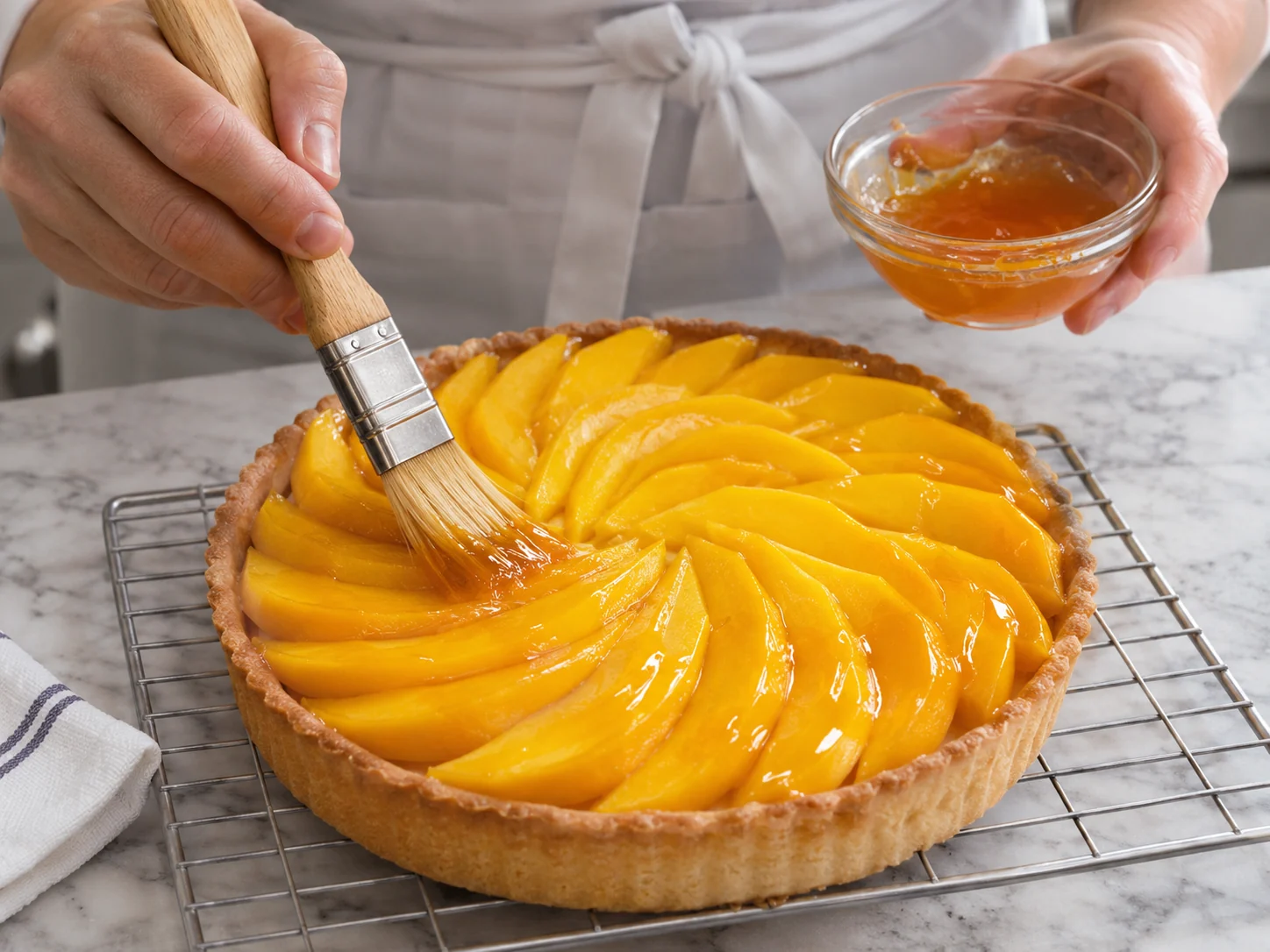
The term "abricoter" (to apricot glaze) refers to a culinary technique that involves applying a thin layer of glaze, typically made from sieved and sometimes slightly diluted apricot jam or jelly, onto the surface of a pastry. This operation is performed using a pastry brush. Although the name specifically evokes apricot, the technique has expanded to include the use of other fruits (quince, apple, etc.) or neutral glazes. However, apricot remains the most traditional choice due to its color, balanced acidity, and pectin content, which gives it good setting properties. The primary goal is to enhance the preparation by giving it a shiny and appetizing appearance, while also adding a light protective layer and a subtle fruity note.
Desired Result
The primary objective of apricot glazing is to achieve a smooth, shiny, and slightly tacky surface on the pastry. This shine is essential for the final aesthetic, making the product more appealing. Beyond the visual aspect, apricot glazing creates a thin barrier that helps protect the pastry's surface from oxidation and drying out, thereby slightly extending its freshness and shelf life. It can also serve as a base to secure other decorative elements, such as fresh fruits or sugar decorations, by providing better adhesion. The flavor imparted is generally mild and fruity, without dominating the main taste of the pastry.
Equipment and Product Selection
To apricot glaze, the essential equipment is a clean pastry brush, preferably with soft bristles for uniform application without leaving streaks. The size of the brush should be appropriate for the surface to be covered. The main product is a good quality apricot jam or jelly. It is crucial to sieve it finely to remove any fruit pieces and achieve a perfectly smooth texture. If the jam is too thick, it can be gently heated with a small amount of water or fruit juice to thin it, but without making it too liquid, which risks soaking the pastry. For specific applications, neutral glazes or jellies from other fruits can be used, but apricot jam remains the benchmark for its golden color and its sugar-acidity balance.
Understanding the Technique
The act of apricot glazing must be precise and delicate. After preparing the glaze (sieved and possibly slightly heated to thin it), the brush is dipped into the mixture. Excess glaze is drained off to avoid over-application. The application is done with gentle, regular strokes, spreading a thin and uniform layer over the entire surface of the pastry. It is important not to press too hard with the brush to avoid damaging the delicate surface of the dough or fruits. The goal is to glide the glaze over the surface, without allowing it to penetrate excessively. For irregular surfaces or fruits, care must be taken to cover all visible areas for a homogeneous shine.
Observation Criteria
A successful apricot glaze is characterized by several points. The pastry surface should be uniformly shiny, without dull or overly thick areas. The glaze should be transparent or slightly translucent, allowing the color and texture of the pastry underneath to show through. There should be no visible brush marks or excessive drips on the sides. The layer should be thin and not give the impression of a gelatinous thickness. To the touch, the surface should be slightly tacky but not sticky. Finally, the apricot flavor should be subtle, complementing the pastry without masking it.
Educational Applications in Various African Cuisines
The French term describes a pastry finishing technique here. Its principle can be used in glazing exercises with a wide range of preparations. For example, for tropical fruit tarts such as mango, pineapple, or papaya, a light glaze made from mango jam or quince jelly could be used to provide shine and protect the fruits from oxidation. On cakes made from local flours (millet, sorghum) or sweet fritters, a thin glaze made from date syrup or reduced and sieved hibiscus (bissap) juice could fulfill a similar function of embellishment and light protection. The idea is to apply the principle of the technique with local ingredients for comparable aesthetic and practical results, without altering traditional flavors.
Distinctions from Similar Techniques
Apricot glazing differs from similar techniques. 'Icing' or 'glazing' (in a broader sense) is often thicker, opaque, and may involve powdered sugar and a liquid (water, milk, lemon juice), forming a more covering and sometimes brittle layer. 'Lustering' is a more general term that can include apricot glazing, but also the application of a simple syrup, melted butter, or beaten egg to impart shine, often before or during baking. Apricot glazing is specific due to its use of a fruity glaze (traditionally apricot) and its post-baking application for a transparent shine and light protection. 'Syruping' involves soaking a pastry with syrup to moisten and flavor it, with the syrup penetrating the dough rather than remaining on the surface.
Errors and Corrections
A common mistake is applying too thick a layer of glaze, which makes the pastry too sweet, sticky, and can mask its texture. To correct this, ensure the brush is well-drained and spread the glaze thinly. Poorly sieved glaze will leave lumps, detracting from the aesthetic; the solution is to always sieve before use. If the glaze is too cold and thick, it will be difficult to spread evenly; warming it slightly will make it more fluid. Conversely, a glaze that is too hot or too liquid risks soaking the pastry or dripping excessively; it should be allowed to cool slightly or thickened if necessary. Pressing too hard with the brush can damage the pastry's surface; a light touch is essential.
Variations and Adaptation
Although apricot is the reference fruit, the technique can be adapted with other clear and fruity jams or jellies. For example, quince or apple jelly can be used for more neutral flavors or to accompany other fruits. Commercial neutral glazes, based on pectin, are also available and offer shine without added flavor, allowing the intrinsic taste of the pastry to be highlighted. For savory applications, though rare, a thin glaze made from reduced and gelled broth could be considered for terrines or pâtés en croûte, but this deviates from the traditional sweet spirit of apricot glazing. Adaptation is key to integrating this technique into various culinary creations.
My Advice
For a perfect apricot glaze, the key lies in the preparation of the glaze and the delicacy of the gesture. Always take the time to sieve your apricot jam and warm it very slightly so that it is just lukewarm and fluid, but not scalding hot. Use a clean, soft brush, and apply the glaze in a very thin and uniform layer. The objective is not to add a thick layer of jelly, but to create a brilliant veil that enhances the pastry without weighing it down. If you are working on fresh fruits, such as mango slices on a tart, be sure to cover all exposed surfaces to prevent oxidation and maximize shine. A good apricot glaze is the finishing touch that transforms a good pastry into a gourmet work of art.
Sources and further reading
2026-11-19