Appareil (Culinary Base)
French
Editorial collection: RecettesAfricaines.com · Publication director: Alioune FALL.
Definition and Scope
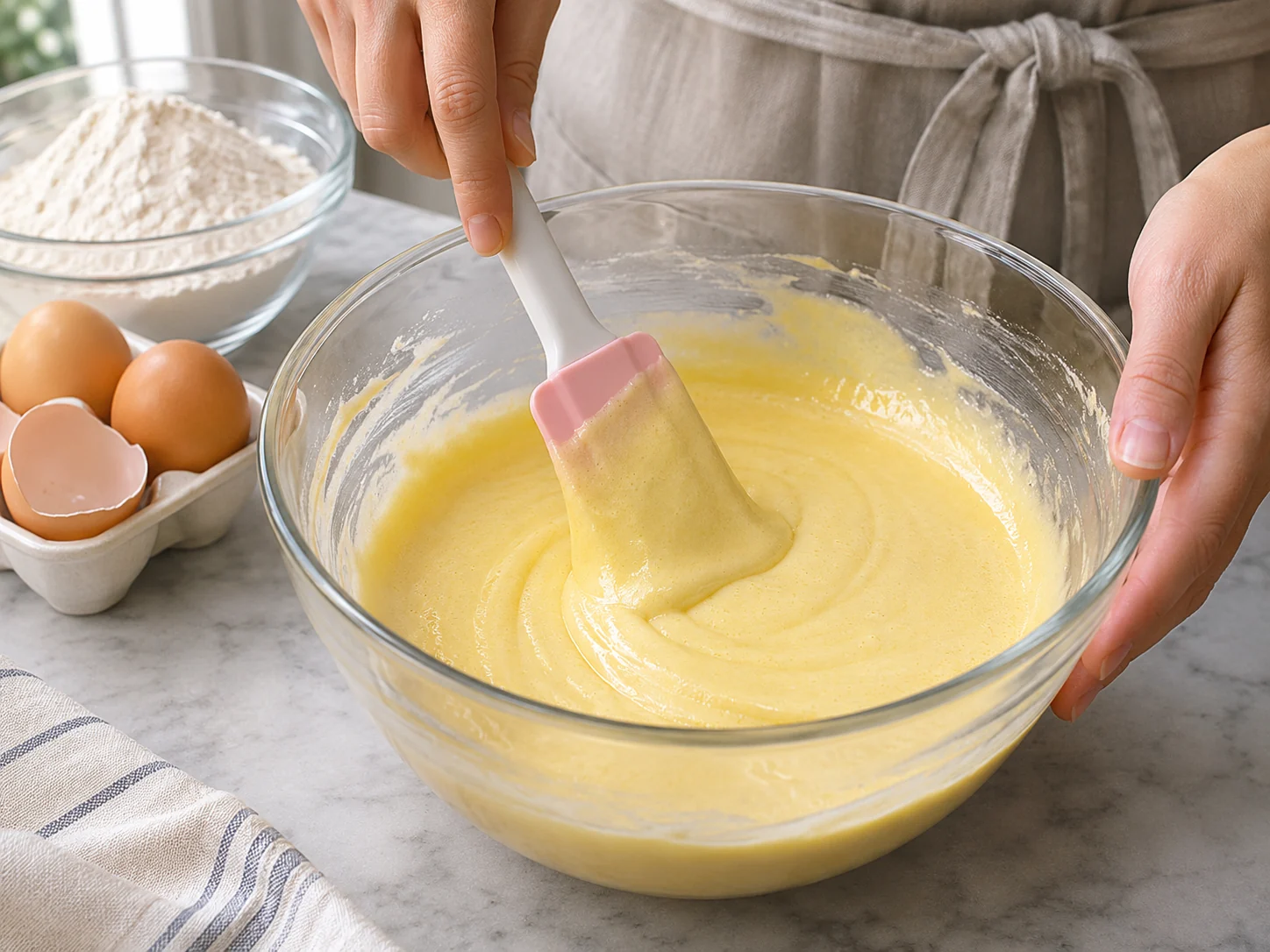
In culinary arts, the term "appareil" refers to a semi-finished preparation, a homogeneous or heterogeneous mixture of ingredients that forms the base or an essential component of a dish. It represents a crucial intermediate step where flavors and textures begin to unite before final cooking or assembly. An appareil is not a dish in itself, but rather the building material that, once transformed, will become the dish. For example, crêpe batter is an appareil, as is the stuffing for poultry or the base for a pastry cream. The word emphasizes the composition and consistency of the mixture, rather than its final destination. It is distinct from the broader concept of "preparation," which can include steps like cutting or cleaning ingredients. An appareil is specifically the result of an intentional mixing of ingredients for a precise culinary function.
Desired Outcome
The primary objective of creating an appareil is to achieve a stable and homogeneous (or intentionally heterogeneous, as appropriate) base that will ensure the success of the final dish. Texture, consistency, flavor balance, and the ability to react to cooking are the determining criteria. A well-made appareil should allow for an even distribution of ingredients, thereby preventing unpleasant surprises during tasting, such as lumps, overly salty areas, or uneven textures. For a cake appareil, a smooth and airy texture that will rise well during baking is desired. For a stuffing, the aim is for cohesion that will maintain its shape and flavors. The desired outcome is therefore a reliable culinary foundation, ready to be transformed by heat, cold, or other processes.
Equipment and Ingredient Selection
The choice of equipment is essential for the success of an appareil. A whisk, spatula, rubber scraper (maryse), mixing bowl (cul-de-poule), or salad bowl are basic tools. For appareils requiring great homogeneity or air incorporation, a manual or electric whisk will be preferred. For more delicate mixtures where the texture of ingredients is to be preserved, a spatula or rubber scraper will be more suitable. The selection of ingredients is equally fundamental: fresh eggs for better emulsion, sifted flour to prevent lumps, dairy products at the correct temperature for optimal incorporation. The quality of ingredients directly influences the texture and flavor of the appareil. For example, fresh, seasonal vegetables for a stuffing will provide more taste and nutrients than frozen or damaged vegetables. The temperature of ingredients can also play a crucial role, as for a cream appareil where butter should be softened (pommade) to incorporate easily.
Understanding the Technique
The creation of an appareil involves a series of precise and intentional actions. It's not merely about mixing, but about combining ingredients in a specific order and with an adapted technique. For instance, for a cake appareil, one often begins by creaming butter and sugar to incorporate air, then adds eggs one by one for a stable emulsion, before incorporating sifted dry ingredients in several additions, often alternating with a liquid. Each addition is followed by gentle but effective mixing, aiming to homogenize without overworking the dough, which could undesirably develop gluten. The movement should be fluid, regular, and adapted to the consistency of the mixture. Observing the texture and reaction of the ingredients at each stage is crucial for adjusting the motion and applied force. Understanding the technique is therefore a dance between the hand, the tool, and the ingredients, guided by the final objective of the appareil.
Observation Criteria
Several criteria allow for evaluating the quality of an appareil. Consistency is paramount: is it too liquid, too thick, lumpy, or perfectly smooth and homogeneous? The color should be uniform and correspond to the ingredients used. The smell is also an indicator: it should be fresh and pleasant, without any off-notes. For an egg-based appareil, shininess can indicate a good emulsion. For a batter appareil, the absence of lumps is a sign of success. The ability of the appareil to hold on a spatula or to flow in a certain way (for example, forming a ribbon for a génoise batter) are important visual and tactile benchmarks. These observations allow for adjusting the mixture during preparation, for instance, by adding a little liquid if the appareil is too thick, or by mixing longer if lumps persist. Experience helps develop an intuition for these criteria.
Pedagogical Applications in Various African Cuisines
The concept of an appareil, though the term is of French origin, finds functional equivalents in many African cuisines, even if the names and ingredients vary. For example, the preparation of batter for African doughnuts (such as 'puff-puff' or 'mikate') is an appareil: a mixture of flour, yeast, sugar, and water that must reach a certain consistency and ferment before frying. Similarly, stuffings for stuffed vegetables or meatballs in North or West African cuisines are appareils, where minced meat is mixed with spices, herbs, and sometimes rice or soaked bread to obtain a homogeneous and flavorful mass. Another example is the base for thick sauces made from vegetables or legumes, such as okra or pounded cassava leaves, which are mixed with other ingredients to form a paste before being cooked. These pedagogical examples demonstrate that the principle of combining ingredients to form a coherent base before final cooking is universal, even if the techniques and ingredients are specific to each culinary culture.
Distinctions from Related Techniques
It is important to distinguish an appareil from related techniques to avoid confusion. An appareil is the result of a mixture, not the act of mixing itself. "Mixing" is the action of combining ingredients, while the appareil is the substance obtained. A "preparation" is a more generic term that encompasses all steps before cooking, including cutting, cleaning, and mixing. An appareil is a specific category of preparation. It also differs from a "dough," which is often denser and more elastic, like bread or pizza dough, although some doughs can be considered appareils. An "emulsion" is a type of appareil where two immiscible liquids are forced to combine, such as mayonnaise. An appareil is therefore a term encompassing a wide variety of intermediate mixtures, each with its own characteristics and objectives, but all sharing the basic function of being a foundation for a dish.
Errors and Corrections
Common errors in making an appareil include insufficient or excessive incorporation of ingredients, mixing too quickly or too slowly, or using ingredients at the wrong temperature. For example, lumps in a crêpe batter are often due to unsifted flour or too rapid an addition of liquid. The correction involves whisking vigorously or passing the appareil through a sieve. A cake appareil that collapses during baking can be a sign of excessive mixing after the addition of flour, which overdevelops the gluten. To correct an appareil that is too liquid, one can add a little flour or another dry ingredient, while an appareil that is too thick can be thinned with a little liquid (water, milk, broth). Careful observation and knowledge of ingredient reactions are key to identifying and correcting errors during preparation, thus ensuring the success of the appareil.
Variations and Adaptation
The concept of an appareil is extremely adaptable and comes in a multitude of variations depending on cuisines and dishes. An appareil can be sweet or savory, liquid or thick, light or dense. For example, a quiche appareil is savory and based on eggs and cream, while a soufflé appareil is light and airy thanks to whipped egg whites. Adaptation involves modifying ingredient proportions, adding or removing components, or changing mixing techniques to achieve the desired texture and flavor. An appareil can be adapted for specific diets (gluten-free, vegan) by substituting ingredients (rice flour, flax eggs, plant-based milks). Creativity in cooking often comes from the ability to understand and manipulate basic appareils to create new flavors and textures, while respecting the fundamental principles of culinary chemistry. Each variation is an exploration of the possibilities offered by the mixing of ingredients.
My Advice
My main advice for making an appareil is to always take the time to observe your ingredients and your mixture at every stage. Cooking is not an exact science where one blindly follows a recipe; it is also a matter of sensation and adaptation. Feel the texture under your spatula, look at the sheen, listen to the sound of the whisk. Don't be afraid to adjust the quantities of liquid or dry ingredients if the consistency doesn't match what you expect. A flour can absorb more or less moisture depending on the brand or environment. The temperature of eggs can vary. These small variations have an impact. Patience and attention to detail are your best allies in mastering the art of the appareil, thus ensuring a solid and successful foundation for all your culinary creations.
Sources and further reading
2026-11-19